Contributions
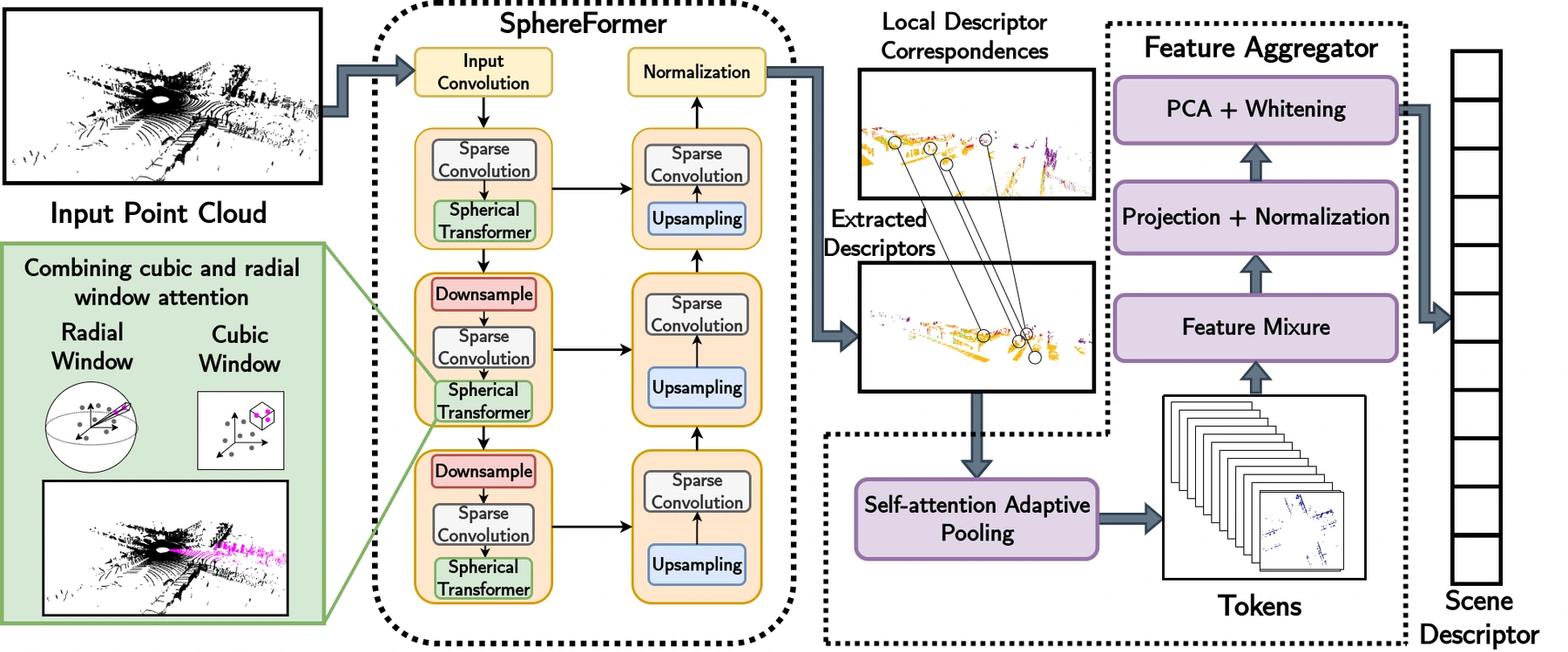
- SALSA: A novel, lightweight, and efficient framework for LiDAR place recognition that delivers state-of-the-art performance while maintaining real-time operational capabilities.
- SphereFormer: Utilized for local descriptor extraction with radial and cubic window attention to boost localization performance for sparse distant points.
- Adaptive Pooling: A self-attention adaptive pooling module to fuse local descriptors into global tokens. It can aggregate arbitrary numbers of points in a point cloud without pre-processing.
- MLP Mixer Token Aggregator: An MLP mixer-based aggregator to iteratively incorporate global context information to generate a robust global scene descriptor.
Video
Results
The spreads of the Recall@1 before and after re-ranking for best-performing models are plotted in the following figure.
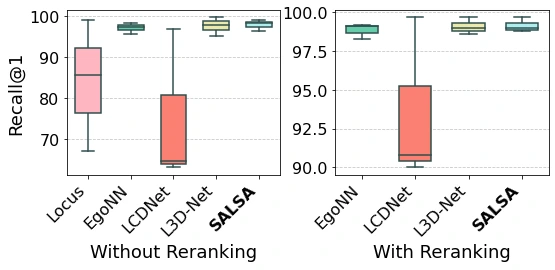
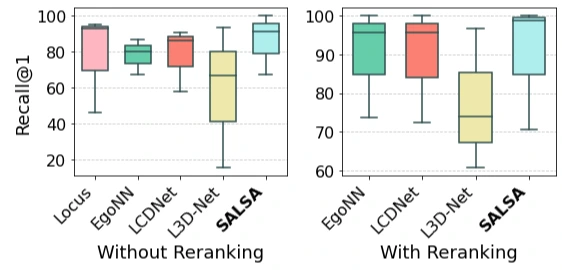
Fig. 2: Box plot displaying Recall@1 across six datasets, with first to third quartile spans, whiskers for data variability, and internal lines as medians.
Visualizations
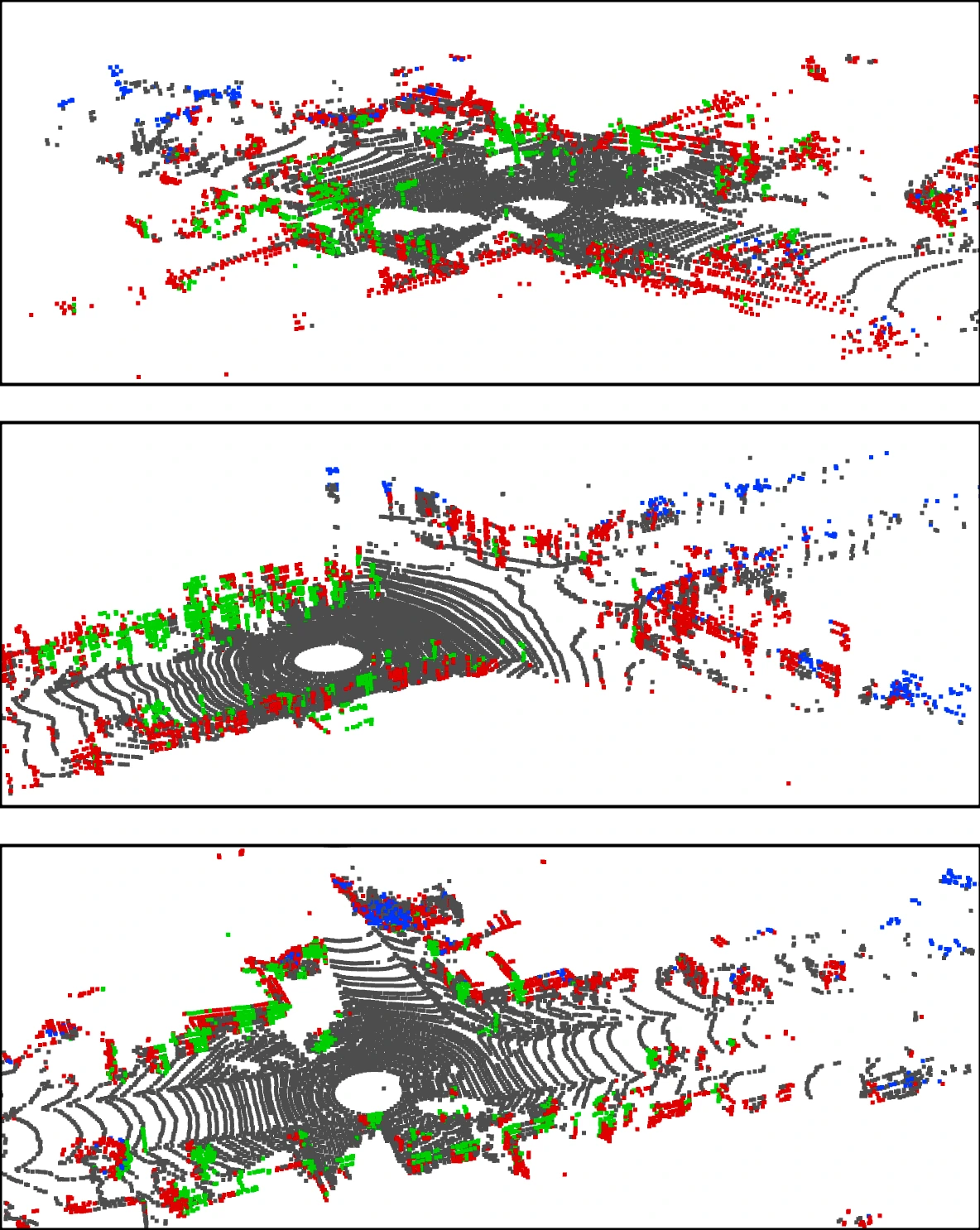
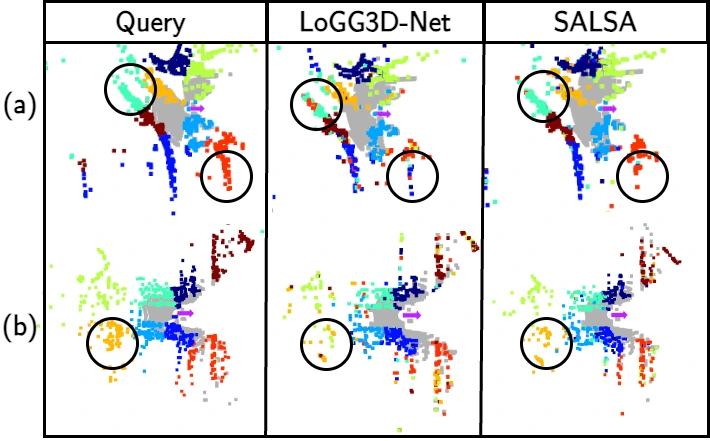
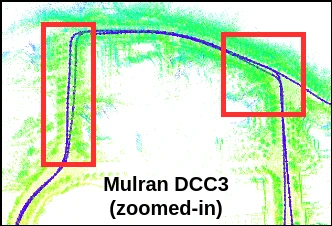
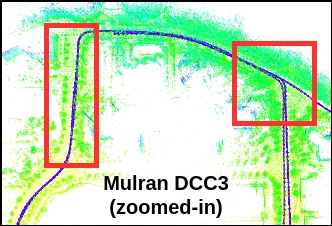
Fig. 5: Comparison of LiDAR-only odometry and maps: (a) without loop detection, and (b) after online pose graph optimization from SALSA loop detections. The highlighted rectangles emphasize the map and odometry disparities due to loop closures.
Citation
@article{goswami2024salsa,
  title={SALSA: Swift Adaptive Lightweight Self-Attention for Enhanced LiDAR Place Recognition},
  author={Goswami, Raktim Gautam and Patel, Naman and Krishnamurthy, Prashanth and Khorrami, Farshad},
  journal={IEEE Robotics and Automation Letters},
  year={2024},
}